Showing posts with label Yugoslavia. Show all posts

Friday, December 19, 2025

Balkans contre Maghreb - statut des femmes et des personnes LGBTQ+

 J'adore faire du shopping avec mon amie serbe Slavica. Nous sommes nées dans le même pays – l'ancienne Yougoslavie – mais nous sommes maintenant originaires de deux pays, elle de Bosnie et moi de Croatie. Nous aimons toutes les deux regarder les dernières cris de la mode. Un des articles actuellement populaires – le pantalon dit "ballon" – ne trouvera pas sa place dans nos garde-robes. Pourquoi? Nous avons immédiatement associé ce pantalon ample, aux jambes larges et resserrées autour de les chevilles, aux dimije, un vêtement porté par les femmes musulmanes dans les zones rurales de Bosnie. Slavica en a vu plus que moi en Bosnie, mais les femmes portant des dimije colorées, et des chemises à manches longues avec une courte veste sans manches appelée yelek, étaient souvent vues dans des villes en Croatie, où elles venaient vendre leurs marchandises et faire leurs achats. Mais on a appris des dimije principalement grâce aux spectacles de danses folkloriques fréquemment organisés et diffusés à la télévision.

Danseuses de folkloriques yougoslaves vêtues de costumes traditionnels de Bosnie

En Yougoslavie communiste, le gouvernement et les organisations culturelles promouvaient activement la diversité culturelle du pays et le principe de "bratstvo i jedinstvo” (fraternité et unité). La Bosnie et le Kosovo (qui faisaient alors partie de la République de Serbie) abritaient les plus grandes communautés musulmanes, tandis que dans d'autres régions, les musulmans étaient minoritaires et avaient tendance à s'intégrer à la population locale. Dans des villes comme Zagreb et Belgrade, les musulmans étaient généralement aisés et bien éduqués. Beaucoup d’eux étaient aussi riches que les hommes au pouvoir, car ils géraient des petites entreprises et des ateliers d'artisanat florissants, tandis que la population générale vivait avec des salaires modestes.

L'expression populaire qui tournait en dérision la prétendue égalité était : “Certains sont plus égaux que d’autres." Mais bonne éducation était accessible à tous, et j'ai réalisé plus tard que la notre était bien meilleure que dans de nombreux pays occidentaux. Le problème était qu'après avoir terminé les études, il était impossible de trouver un emploi sans avoir des relations avec des personnes influentes. C'est pourquoi de nombreux jeunes gens brillants et diplômés sont partis travailler en Allemagne et dans d'autres pays occidentaux.

Un changement apporté par le communisme en Yougoslavie comme au Maghreb, fut l'évolution du rôle des femmes. Pendant la Seconde Guerre mondiale, de nombreuses femmes en Yougoslavie se sont jointes à la résistance partisane contre l'invasion allemande et le fascisme. Uniformées et armées, elles se sont battus côte à côte avec les hommes, partageant tout sur un pied d'égalité, y compris les logements. Après la guerre, le pays ravagé avait besoin de reconstruction et, faute de moyens financiers, le parti communiste a fait appel aux jeunes pour participer à des “actions de travail” volontaire. L'hébergement sous tente et soins un ciel clair a rapproché jeunes hommes et jeunes femmes, et si le travail par jour était contrôlé, la vie nocturne ne l'était pas. La révolution sexuelle qui s’est propagé sur le monde occidental dans les années 60 était déjà bien installée dans les grandes villes de Yougoslavie. Cela a crée un fossé entre les parents, attachés aux valeurs morales d'avant-guerre, et leurs enfants nés après la guerre. Ma mère a grandi dans une petite ville où une jeune fille ne pouvait pas être vue dans la rue après 20h sans être accompagnée d'un parent. J'étais une jeune fille d’époque où ma génération sortait dans les cafés et les discothèques à 20h. Pour moi, être isolée à la maison pendant que mes amies s'amusaient dehors était traumatisant et j'ai commencé à me rebeller. Les disputes avec ma mère se sont transformées en une guerre de haine et de ressentiment. J'ai quitté la maison dès que j'ai trouvé un emploi qui me permettait de couvrir mes besoins, avant même d'obtenir mon diplôme universitaire.


Femmes partisanes de Yougoslavie pendant la Seconde Guerre mondiale

La sexualité était rarement discutée à la maison, mais quelques notions de base étaient enseignées en cours de biologie au lycée. Lorsque les premiers tampons sont apparus, mes meilleures amies et moi – les influenceuses de l'époque – avons été parmi les premières à adopter cette innovation pratique, mais nous n'avions aucune idée de comment les utiliser. Nous avons finalement trouvé la solution lors d'une réunion chez l'une d'entre nous, devant un grand miroir.  Dans des villes comme Zagreb et Belgrade, les filles commençaient à avoir des relations sexuelles avant de se marier. Au lycée, on s'attendait à ce que les filles qui avaient un petit ami soient sexuellement actives. L'arrivée de la pilule contraceptive a grandement facilité les choses. En cas de problème, l'avortement était gratuit et accessible. Même si le consentement parental était théoriquement requis, il était toujours possible de l’éviter parce que personne ne voulait abandonner la jeune fille en difficulté. Au Maghreb, les revolutions et mouvements contre colonialisme n’ont pas apporté les mêmes libertés sexuelles. Comme on a vu dan le film tunisien La belle et la meute, un couple non marié risquait d’être ârrêté s’il était trouvé seul le soir. 

En Yougoslavie, la liberté de religion était garantie, mais les églises étaient généralement vides et les mosquées et les synagogues étaient considérées comme des monuments historiques plutôt que comme des lieux de culte. Les jeunes ne croyaient ni au communisme ni à la religion. Outre l'éducation gratuite, l'absence d'influence religieuse contribuait à maintenir une certaine unité parmi les jeunes. Chacun pouvait fréquenter qui on voulait s'il tombait amoureux. Mais si, à l'époque, il me semblait qu'il n'y avait aucune restriction quant au choix du partenaire, j'ai réalisé bien des années plus tard que de nombreuses belles histoires d'amour que je connaissais se terminaient par le mariage de l'homme avec une femme de sa propre origine ethnique et religieuse. Autre phénomène: les jeunes hommes qui aimaient les filles à la mode et libres retournaient souvent dans leur village natal pour épouser une jeune femme dont la virginité était garantie. La différence entre la culture rurale et la culture urbaine était encore très marquée à cette époque. Il me semble qu’au Maghreb il y avait aussi une difference même si c'était contraire: les femmes en ville portait le voile en dehors, mais pas les femmes en milieu rural. 

Le conflit sanglant de 1995 dans les Balkans a choqué le monde entier, y compris moi-même, mais seulement parce que nous avions ignoré les signes avant-coureurs. Par example: au milieu des années 70, j’ai sorti avec un ami qui à la fin du rendez-vous m’a dit qu'il ne serait pas heureux tant que les Croates n'auraient pas besoin d'un passeport pour voyager en Serbie. Je le trouvais complètement fou car je ne savais pas qu'il n'était pas un cas exceptionnel. La désintégration de la Yougoslavie 20 ans plus tard a conduit à un conflit sauvage, particulièrement violent en Bosnie où la population était la plus diverse. Comme le monde a appris, les forces paramilitaires serbes de Bosnie ont massacré des milliers d'hommes musulmans, mais ce qui est peut-être moins connu, c'est que les Serbes en Bosnie ont mis en place des camps de viol. Des femmes non-serbe y étaient retenues prisonnières pour servir les insurgés armés. Elles ne leur donnait aucune protection contraceptive, car il y avait des Serbes qui souhaitaient accroître leur population en Bosnie. La plupart des femmes violées étaient musulmanes, mais leur nationalité importait peu car, selon certaines traditions balkaniques, l'enfant prend la nationalité du père. La femme serve seulement comme un réceptacle pour porter le foetus. Les femmes révolutionnaires au Maghreb ont été emprisonnées et torturées dans des décennies plus tôt mais pas pour leur appartenance ethnique et pas en si grand nombre. Les activistes comme algérienne Djamila Boupacha et marocaine Fatna El Bouih sont été soumis a la torture et viol pour leurs activités contre les autorités, considérées comme masculines.

Dans la Croatie, nouvellement indépendante depuis 1992, l'influence religieuse a apporté un certain recul pour les femmes. Ce revers a été relativement bref, car les femmes croates se sont levées et quand le pays a entré dans l'Union européenne en 2013, la Croatie a dû se conformer aux normes européennes. Cependant, un changement a eu lieu dans les domaines sociaux et familials. L'avortement qui était presque une forme de contraception dans ma jeunesse, est aujourd’hui mal vu. La promiscuité sexuelle et l'infidélité conjugale, si courantes et ouverts pendant ma jeunesse, sont aujourd'hui beaucoup moins visibles.  

Mais, alors qu'autrefois les femmes victimes de viols et de violences conjugal avaient peu ou pas de protection, car elles étaient stigmatisées si elles osaient parler, il existe désormais des associations qui offrent un refuge aux femmes victimes de violences et les encouragent à témoigner. Si les autorités croates ne parviennent pas à protéger les victimes, celles-ci peuvent saisir les instances européennes, même si peu de victimes ont la volonté et les ressources nécessaires pour le faire. Les personnes LGBTQ+ bénéficient également du soutien d'organisations dédiées. Dans des villes comme Zagreb, encore relativement petites avec une population de moins d'un million d'habitants, les personnes LGBTQ+, qui cachaient auparavant leur orientation sexuelle et menaient parfois une vie hétérosexuelle par crainte de l'ostracisme familial ou social, sont désormais plus ouvertes. Cependant, les opérations de changement de sexe sont fortement condamnées par l'Église et, par conséquence, par la société.

Il semblerait que, comparée au Maghreb, la Croatie aujourd’hui est un pays où l'égalité des droits humains est respectée et où les femmes bénéficient d'une meilleure protection. L'égalité des genres, promue depuis l'ère communiste a permis aux femmes à devenir scientifiques, universitaires, artistes de renom et politiciennes. La Croatie a eu sa première femme présidente, Kolinda Grabar-Kitarović (2015-2020). L’ancienne première ministre serbe et actuelle présidente de l'Assemblée nationale, Ana Brnabić, est ouvertement lesbienne, ce qui était impensable il y a encore quelques décennies. 

Pourtant les véritables moteurs du progrès en matière de droits des femmes dans les anciennes républiques yougoslaves sont les femmes journalistes et écrivaines, pas les politiciennes. Même sous le communisme, les femmes journalistes figuraient parmi les critiques les plus virulentes du gouvernement et des problèmes de société. Le nombre croissant de femmes journalistes ces dernières décennies s'est concentré sur les questions féminines, notamment les violences conjugales et le rôle des femmes dans la société. La sexualité et la nudité – masculine et féminine – étaient déjà courantes dans les médias et au cinéma depuis les années 1960, contrairement au Maghreb.
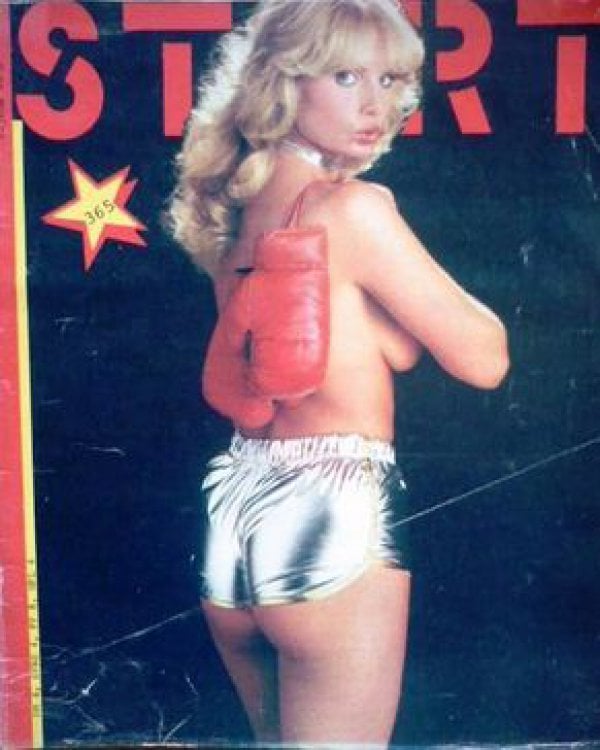
start9
La couverture de l'ancien magazine yougoslave Start

Les partis de gauche au Maghreb, comme les communistes en Yougoslavie, avaient promu les droits des femmes car ils avaient besoin de leurs soutien pendant les mouvements révolutionnaires. Après la victoire, les femmes du Maghreb ont souvent perdu des libertés acquises pendant les batailles.  En Croatie, la montée du nationalisme et de pouvoir de l’église dès son independence a causé un revers pour les femmes croates aussi, mais d'autres facteurs – tels que la liberté de la presse, l'égalité d'éducation pour les filles et les garçons et la proximité de l'Europe occidentale, de plus en plus laïque, ont permis aux femmes de retrouver leurs droits.

L'Algérie, le Maroc et la Tunisie ont produit des grands auteurs, intellectuels et militants qui défendent les droits des femmes et des personnes LGBTQ+. Si les féministes aujourd’hui peuvent s'exprimer plus ouvertement, comme par example Zainab Fasiki qui a publié son band dessiné sur la sexualité feminine à Casablanca, l’activisme LGBTQ+ n’est pas accepté et se déroule généralement dans la clandestinité ou dans la diaspora. L'écrivain et cinéaste marocain Abdellah Taïa a écrit sur son expérience douloureuse d'homosexuel au Maroc en France. Les relations sexuelles entre personnes de même sexe sont interdites par la loi au pays du Maghreb. Pourtant, avec la diffusion des médias numeriqués, il devient de plus en plus difficile d'empêcher la circulation de l'information. On effet, le magazine marocain TelQuel a publié en 2006 un article sur la vie de Taïa et son experience de homosexuel. Comme par tout le monde, les forces conservatrices réagissent contre progrès de ce type. Savoir comme les luttes de se genre ont réussi dans autres pays peut inspirer les activistes du Maghreb à progresser, même modestement, vers plus d’égalité.

Le progrès depends toujours du people de ces pays. Donc, les militants locaux jouent un rôle crucial dans la promotion de la presse libre, l’égalité d'education pour tous et la protection du droit d’homme de n'importe quel sexe.  Les autorités religieuses at le gouvernement doivent reconnaître que la pleine participation des femmes et de LGBTQ+ dans tous les domaines de la vie est essentielle pour le progrès d'un pays. Leur lois doivent assurer une protection pour chaqun.  Le monde doit surveiller l'application de ces lois parce que les examples du Maghreb et de l’ancient Yougoslavie démontrent que les minorités sexuelles et ethniques peuvent à tout moment perdre les droits et protections qu’ils ont acquis au prix de grads efforts.

Tuesday, November 13, 2018

Goran Bregović: a Polish View

Goran Bregović was in the area recently with a concert titled Three Letters from Sarajevo.   I could not make it, quelle dommage, but I alerted all my Slavic friends to go if they can.  I have been a Bregović fan since seeing the Queen Margo movie many years ago on VHS and being startled by the opening bars of the soundtrack: "Ju te san se zajubija....", a traditional   Dalmatian song.  Rushing through the credits, I learned that the movie music was arranged by one Goran Bregović. Later, I got a CD from a Polish friend featuring Bregović in concert with Polish musician Kayah and heard that he was immensely popular in Poland. Wow! It so happened that another Polish friend of mine actually made it to the concert and here is his account.

Three Letters from Sarajevo, review by Wojciech Zorniak


I had never seen Goran Bregovic live on stage before this Saturday. I overslept his biggest Polish hit "Sleep baby, sleep," recorded with Polish singer Kayah, I did not hear his duets with another Polish singer Krzysztof Krawczyk. I had heard a few of his pieces on YouTube. But, I knew that Brego, as he is known in Poland, was big because my friend was his Polish manager, wrote a book about him and as a result of this association he was able to buy himself a villa in the posh part of Warsaw.

Therefore, when I learned that Goran would appear in the Strathmore Music Center, which is within the distance of a Kalashnikov shot from my home, I would not miss the chance to see him. After all, man does not live by McCartney alone. Strathmore Hall, in suburban Maryland, juts outside Washington DC, was filled to the brim. From the conversations I overheard, I gathered that the audience was mainly the immigrant population from former Yugoslavia. Serbian and Croatian dominated. Not that I could capture the linguistic nuances, but I could tell that much.

I was hoping to eat čevapčići at the bar and wash them down with slivovitz, but no such luck. I paid ten bucks for a lousy plastic cup of mediocre wine from Chile. I sat next to my Balkan brothers who spoke the language so similar to mine, but still hard to understand. I felt at home, but a stranger all the same. An interesting feeling!

Finally, Goran walked on the stage in a white suit (as always), with a guitar and computer, immediately followed by three violinists, two bulky Bulgarian ladies in folk costumes, a brass band, a guy with a large drum and a male choir. And it started. Like a thunderbolt from the clear sky, like a volcano eruption, like an avalanche in the Alps, like the end of the world. I hit the back of my chair as if I were taking off in a space rocket. Ethnic music crucible dazed. The drummer hit the drum, the Bulgarian ladies climaxed in mezzo-soprano, the trumpets thundered straight from Jericho, and I, with horror, noticed that my legs began to shake dangerously, as if they wanted to dance. Strathmore is absolutely not fit for wild dancing. So I resorted to jumping up and down.

On the stage, it was getting more and more lively. "Three Letters from Sarajevo" is the title of the new Bregovic album and the program in Strathmore. The artist combined the music of three religious groups here, hence the three violinists. Three melancholic and romantic violin spacers gave us a chance to take a breath and recuperate. And then full throttle again. The walls were trembling, as did the candelabra, and the floors vibrated. The audience went crazy. People around me were on cloud nine, possibly ten. I had the feeling that in the heat of the sound battle some toothless Baba Yaga jumped into my bed. And Marshall Tito was looking down on us from above, smiling benevolently.

***

Another, non-Slavic, friend posted this on Facebook, also raving about the concert at the Strathmore.

https://www.facebook.com/betsysmithplatt/videos/10214760739946966/


Poster for the Bregovic Chicago concert

Back in Zagreb, I would have been hard pressed to identify Bregović as a member of the then popular Bosnian rock band Bijelo Dugme.  Even though many of us snubbed the band in favor of British and American groups, some of its hit songs, rooted firmly in the Balkan tradition, tugged at our heartstrings:  "It's like this, my dear, when a Bosnian loves you"  (Tako ti je mala moja kad ljubi Bosanac), "Speed on my horses"  (Požurite konji moji) .... They were too close to home for those of us striving to get away from the local culture. Sometimes one needs to see things from far away to understand their value. 

When the band fell apart, Bregović did not.  He left former Yugoslavia for the west and greater glory, based on his Sarajevo memories, poking fun at those of us who had rejected all things made at home.

https://www.youtube.com/watch?v=2fJP1seQFtY

Good for you, Brego!

Tuesday, May 31, 2016

Washington, Las Vegas and Our Presidential Candidates

During a recent visit to southern France, many locals asked where I and my friend were from. When she said she was from Las Vegas, people would invariably get excited and wanted to have long discussions about her city while no one cared about my hometown - the capital of the United States and the western world. This now reminds me of the situation with Donald Trump: everyone wants to discuss him, but there is little genuine interest in either Hillary Clinton or Bernie Sanders.

Perusing European newspapers online these days one finds the US news sections flooded with stories about Trump. His every utterance and every move is recorded and discussed in detail, and if Sanders or Clinton are mentioned, it is mostly in relation to Trump. Like: Sanders agreed to debate with Trump after Clinton refused. It's a good thing President Obama went to Hiroshima, to provide a little diversion although even he could not come out entirely Trump-free. He must have been asked a lot of questions about the Republican presidential contender to warrant the statement "world leaders are rattled by him."

But what about Americans? Trump has not changed much in the past few months. Neither has his rhetoric improved. Yet from a candidate that was initially considered nothing more than a clown in the presidential campaign circus, he has become a serious threat to Hillary Clinton, a Democrat and seasoned politician who seemed to have the presidency in her pocket.

Pundits offer explanations such as Congress fatigue, fear of terrorism, loss of manufacturing jobs, Trump's TV popularity, his (dubious) business achievements, straight talk etc. I don't buy any of that. I think Trump's formula for success is the same one that gave power to Yugoslavia's Tito, Serbia's Slobodan Milosevic, Lenin, Stalin, Putin and, yes, even Hitler. They were the kind of leaders that could persuade masses, especially uneducated masses, that they had the strength to protect them from whatever. If there was no threat to the nation, one was invented.

As school kids in the communist Yugoslavia we were taught the locution: Yugoslavia is surrounded by troubles (BRIGAMA). The Croatian and Serbian word for "troubles" was an acronym made from the initials of the countries bordering Yugoslavia (Bulgaria, Romania, Italy, Greece, Austria, Hungary, ie. Madjarska and Albania). So from the earliest age, we were made to believe that our country was on the verge of an attack. Tito ruled uncontested for more than 30 years but after he died, the country he had built fell apart. Hitler's Germany went up in smoke, the Soviet Union disintegrated and the kind of Serbia Milosevic had in mind died before it was born.

Even though history proved Stalin to be a mass murderer equal to Hitler or worse, he enjoyed rising popularity after the Soviet Union collapsed and before Putin stepped in to take the role of a new "strong" leader. Some people still mourn Tito's Yugoslavia, and Hitler continues to fascinate the world albeit in a negative way.

About a decade or so ago, while I was driving my son to school, a local station was re-broadcasting the 1960 Kennedy-Nixon presidential debate on foreign policy. I pointed out to my son how sophisticated the discussion was in comparison with the contemporary presidential debates. I particularly considered Bush junior a poor speaker at the time. Now I could point out how sophisticated his debates were in comparison with the ones we've had this past year. Trump especially is a terrible speaker with hardly any complete sentence in his diatribes, and every word of phrase he deems "strong" repeated at least two or three times. 


Example from his Rolling Thunder speech Sunday: "Make America great again! Very simple. Make America great again! So, in riding over, there are hundreds of thousands of people all along the highways, and they can’t get in! In other words, you’re very good at real estate. You got in! Congratulations! Congratulations. " His vocabulary is very limited and the language he uses to describe his rivals - "crooked Hillary" and "lying Ted Cruz"- is beyond the pale. And yet it does not seem to matter at home or abroad.

The amount of attention, including negative attention, Trump gets in the news media gives him status and importance. In the eyes of many people that translates into power. Every nation wants a "powerful" leader, but the United States, to maintain its status as the world premier superpower must have one. Being cruel and obnoxious is more acceptable than being apologetic if it is serves to project the image of power.  

I am reminded of a classic Serbian tale by Radoje Domanović of a people looking for a leader to take them to the promised land. They think that a silent stranger walking with a staff must be the wisest so they pick him. They follow him through thorns and wasteland as he seems to avoid a strait road. When he falls into a chasm, they jump after him. Many die on the way. When months later three remaining families confront the leader, they learn that he is a blind man.

Although the story does not apply to the United States, it illustrates how important an image is for a leader.

With the statue of Abraham Lincoln looking down, Trump delivered his usual crude oration on Sunday, with Rolling Thunder bikers cheering him on. A Vietnam War veteran was quoted as saying “He’s an asshole, and that’s what we need.” Another one said “We need to retake America, because we’ve lost it.” Wow! I must have been asleep. I never noticed we've lost our country. But I noticed that we've lost class. It almost seems as if no classy person would want to run for president any more.  Certainly no one like George Washington who as a teenager copied by hand 110 rules of civility that he followed all his life.  The current crop of presidential candidates seems oblivious to them. Thus wrote Washington:

 -  Speak not injurious words in jest nor earnest; scoff at none although they give occasion.
 -  Undertake not what you cannot perform but be careful to keep your promise.
 -  Speak not evil of the absent for it is unjust.

But does anyone apply these rules in campaign speeches? In the past, leaders strived to sound educated, today they want to identify with the rude and the illiterate.  Maybe that's how they see the majority of voters. Europeans are commenting on Facebook: "America, you might call this an election, but the rest of the world is viewing it as your IQ test. And it's not looking good."

I have always believed (and been rebuked for saying it) that a nation has the leader it deserves. Especially in true democracies where the head of state is freely elected. This is not to say that every individual gets the leader he or she deserves. I tend to agree with de Tocqueville in that "a majority taken collectively is only an individual, whose opinions, and frequently whose interests, are opposed to those of another individual." Come January, a new U.S. president will be sworn in, one that many Americans will not have wanted: a president elected by the majority and imposed on everyone.

The rest of the world will have to deal with our president too. And not everyone will be annoyed if it is Trump. Judging by the amount of attention he gets in the foreign media, he is more attractive to a lot of people overseas than either Clinton or Sanders, sort of like Las Vegas is more seductive than Washington.

Saturday, March 15, 2014

Will Russia Move Further After Crimea?

WASHINGTON — Ukrainian Prime Minister Arseniy Yatsenyuk is meeting with President Barack Obama Wednesday, days before a referendum in Crimea where a Russian-speaking majority is likely to bring the strategic peninsula under Moscow's control. Analysts say the meeting will not stop the referendum, which is set for Sunday, but warn of the urgency of stopping Russia from moving on to other Russian-populated regions of the former Soviet Union.


Ukraine's Arseniy Yatsnyuk at the White House
Russia has made it clear that a flurry of diplomatic activity ahead of the Sunday referendum will have little effect on its plans to take control of the Crimean region.  Washington-based political analyst Peter Eltsov said that no matter what official name it will assume, Crimea is lost to Ukraine. He added Ukraine has to fight to prevent any Russian attempt to move further.

"It's the biggest fear of the new Ukrainian government and it is quite likely - depending of course on the political situation - that [Russian President Vladimir] Putin will try to go to certain parts of eastern Ukraine.  We need to remember that there is no direct by-land connection between Russia and the Crimean peninsula," said Eltsov.


Stephen Blank, an analyst with the American Foreign Policy Council, agreed. He also placed blame on the European Union for a lax response to Russia's move to take over the strategic peninsula. 


Stephen Blank, AFPC
"There have been no real organized economic sanctions on Russia; there have been no systematic strategic military actions to strengthen Ukraine’s ability to defend itself; and if I were Mr. Putin I would think I’ve gotten away with it.  I don’t think he will in the end, but I think up till now there has been too little action, and whatever action there has been, has been uncoordinated," said Blank.

Yatsenyuk's visit to Washington has another significant purpose; Eltsov said the interim government in Kyiv needs U.S. economic support to survive, and the political support to block Moscow from advancing further into Ukraine's territory. Eltsov added that for now, Russian-speaking populations in eastern Ukraine seem to reject Russian intervention, but that the mood can quickly change.

"The identity really is a fluid category, as anthropolgists say. It depends on the situation, in particular in case of war like we saw, for example, in the former Yugoslavia.  Those issues can really change and switch between sides really fast - overnight - depending on rumors, depending on particular political developments.  This is a very dangerous situation," said Eltsov.

Eltsov also said Putin seems intent on reviving some of the former Russian Empire as his legacy, and if he is not stopped, he will attempt to bring back under Moscow's control other Russian-populated areas, for example in Kazakhstan.


"It is not impossible that given the political situation he would want to take a chunk of northern Kazakhstan, which is populated mostly by Russians. But that would be, of course, a much more difficult enterprise," said Eltsov.

Eltsov said the best guarantee against Russian aggression is a NATO presence in vulnerable areas. He thinks Russia is not likely to invade NATO members Latvia, Lithuania and Estonia, despite their sizeable Russian-speaking populations. 

"The country which is not militarily allied and has a very weak military of its own, and is in such financial chaos, is definitely a very easy target," said Eltsov.

Last week, the U.S. government authorized sanctions, including visa restrictions, against those found to have violated Ukraine's territorial integrity. The European Union also took measures against Russia, suspending talks on visas and a new economic agreement.

To see the video version of this report click below:

http://www.voanews.com/content/ukraines-pm-to-meet-with-obama/1869353.html